Claude Code Quota Limits Are Breaking Workflows
Claude Code's $200/month Max plan can drain in 90 minutes. Here's what changed in Anthropic's quota and billing model—and 10 tactics to adapt.
ComputeLeap Team

On April 12, 2026, two of Hacker News's top three stories were about the same product failing the same way. A 543-point thread documented Max subscribers burning through their entire weekly allocation in a single afternoon. A 315-point thread traced the root cause to a silent infrastructure change Anthropic made on March 6th without announcement. On Reddit, r/ClaudeAI filled with quota-limit humor and a 2,338-upvote post demanding Anthropic "stop shipping" until it fixed quality regressions.
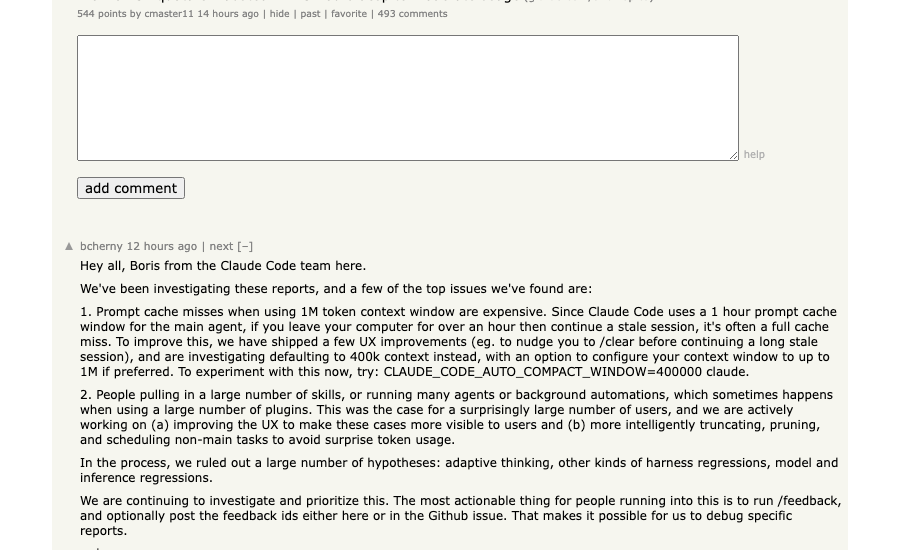
This wasn't random developer frustration. It was a coordinated signal: Claude Code had become load-bearing infrastructure for thousands of engineers, and the billing model hadn't kept up with how people actually use it.
This article breaks down what changed, why it matters, and ten concrete tactics to adapt — whether you're on Pro, Max, or deciding whether to tier your workloads to Codex and OpenCode.
What Actually Changed: Two Silent Decisions
The quota crisis has two distinct causes that compounded each other. Neither was announced.
Change 1: Cache TTL dropped from 1 hour to 5 minutes
On or around March 6th, 2026, Anthropic reverted Claude Code's prompt cache time-to-live from 1 hour back to the API default of 5 minutes. The change was silent — no release notes, no email, no blog post.
The financial impact was immediate and severe. Analysis of API call datasets showed February (when Anthropic was defaulting to 1h TTL) recording only 1.1% cache waste, while every subsequent month showed 15–53% overpayment from cache re-creations. A detailed technical breakdown explains the mechanism: with a 5-minute TTL, any pause in a session longer than five minutes forces Claude Code to re-upload the entire cached context at the cache_creation write rate rather than the far cheaper cache_read rate. For sessions with large project contexts — think a 1M-token window across a complex codebase — that's a significant cost hit on every re-entry.
The Register confirmed that by March 31st, Anthropic's Lydia Hallie was publicly acknowledging the problem: "We're aware people are hitting usage limits in Claude Code way faster than expected. Actively investigating, will share more when we have an update!"
Change 2: The pricing model was never designed for heavy agentic workflows
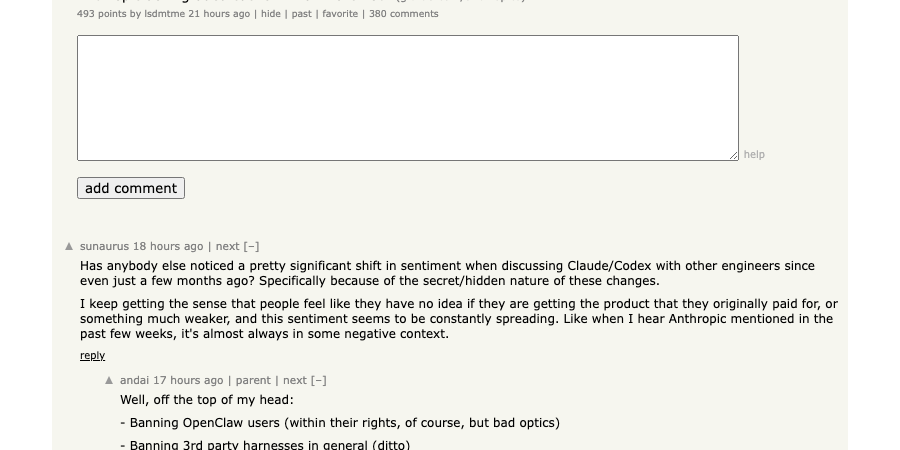
The second issue is architectural. Anthropic's Boris, responding in the main quota exhaustion GitHub thread, explained the mechanics honestly: prompt cache misses on 1M-token windows are expensive to serve. The Pro and Max subscription tiers were designed with usage assumptions that didn't account for the real cost of running Claude Code as a persistent, multi-hour coding agent with large context windows.
The top HN comment on the cache TTL thread captured the macro pattern precisely: GitHub retired Opus Fast, Windsurf raised prices, Cursor uses credit drain, OpenAI added ads. The AI developer tool subsidy era is ending across the board. Anthropic's mistake wasn't adjusting the pricing model — it was doing it silently. That's how you turn a reasonable business decision into a trust crisis.
If you've noticed hitting your 5-hour reset window for the first time in March or April 2026, the cache TTL change is the most likely explanation — not increased usage on your end.
The Quality Regression Double-Hit
The billing crisis would have been manageable if the product quality had held. It didn't.
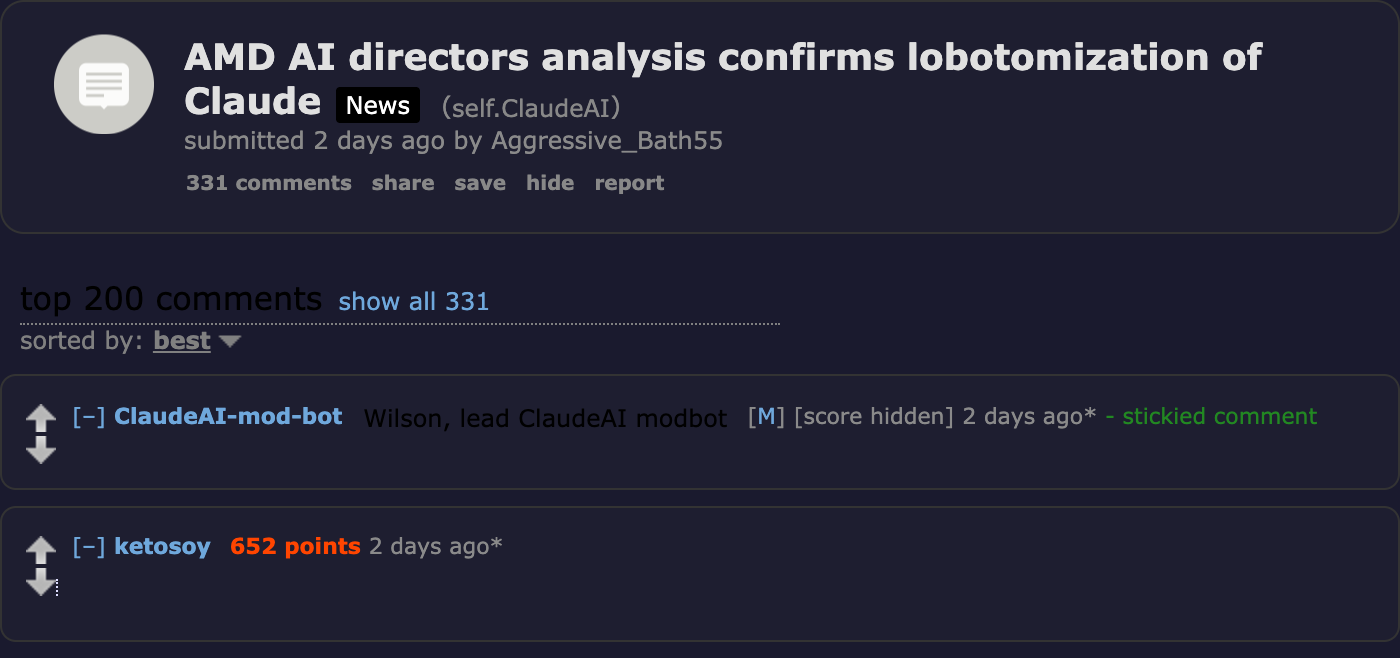
In early April, Stella Laurenzo — AMD's director of AI — filed a documented GitHub issue that became a community flashpoint. This wasn't a vibe-based complaint. Laurenzo analyzed 6,852 Claude Code sessions encompassing 234,760 tool calls and 17,871 thinking blocks.
The findings were specific and reproducible:
- Claude Code reads code 3x less before making edits
- Rewrites entire files 2x more often (instead of targeted surgical edits)
- Abandons tasks mid-way at rates that were previously zero
The degradation coincided with the deployment of thinking content redaction in Claude Code version 2.1.69. An independent analysis with 17,871 thinking blocks summarized the behavioral consequence: "When thinking is shallow, the model defaults to the cheapest action available: edit without reading, stop without finishing, dodge responsibility for failures, take the simplest fix rather than the correct one."
Reddit's r/ClaudeAI amplified the findings with 2,007 upvotes. TechRadar's coverage framed Laurenzo's conclusion: Claude Code "cannot be trusted" for complex engineering tasks in its current state.
Anthropic's engineering manager bcherny responded in the GitHub thread, stating that thinking redaction is purely a UI change with no effect on thinking allocation. That response has not fully satisfied the community, given Laurenzo's quantitative data showing measurable behavioral changes at the same version boundary.
The AMD findings matter most for debugging-heavy workflows that require reading context before acting. For greenfield code generation and isolated tasks, quality regressions are less pronounced.
Why the Rage Is Paradoxically Bullish
Before getting to tactics, it's worth naming something counterintuitive: the intensity of this backlash is a strong product signal.
Andrej Karpathy observed on X that the OpenClaw moment was significant precisely because it was the first time a large group of non-technical people experienced the latest agentic models. You can only be this publicly angry about a tool's limits if the tool has become infrastructure.
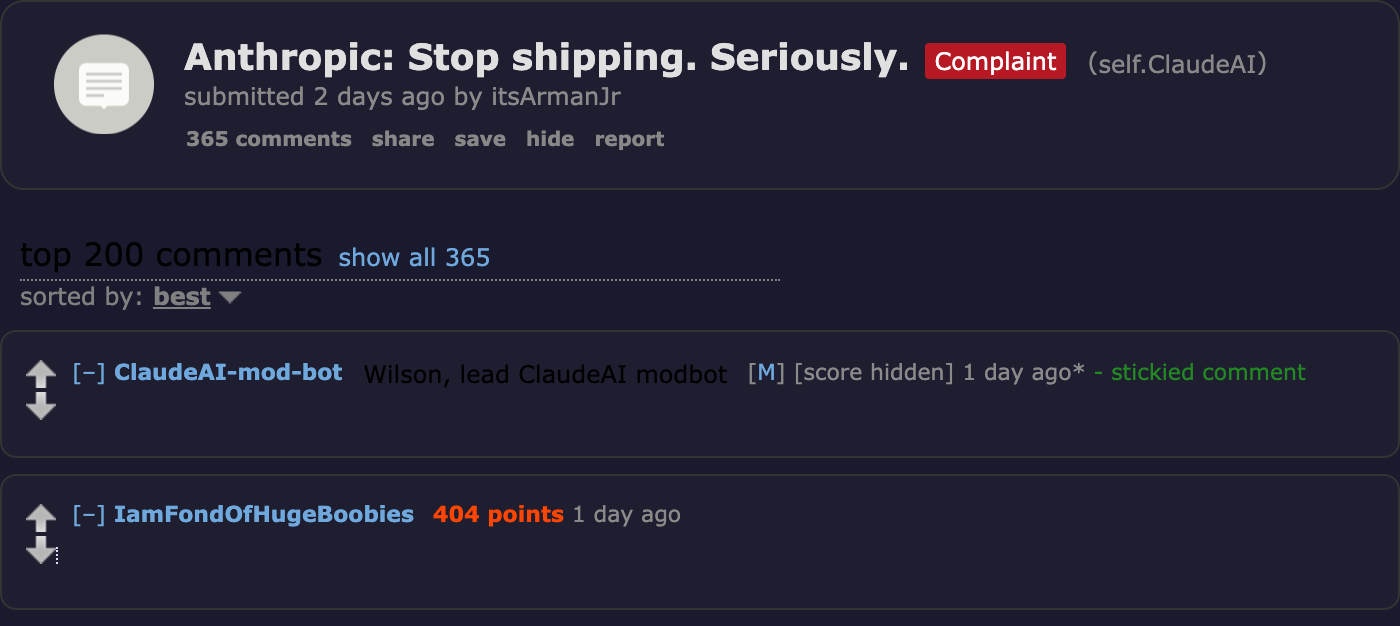
The community reaction to Claude Code's quota problems mirrors the early Heroku, early AWS, and early Stripe communities: loud frustration from people who built real workflows on the product and now can't live without it. That's a different category than ordinary product disappointment.
Anthropic's financial context reinforces this read. All-In's coverage this week cited a $30B run-rate figure, and Polymarket is pricing Anthropic at 90% for best model in April 2026. Companies at this revenue trajectory have leverage to fix infrastructure problems. The question is whether they do it transparently.
The macro point from the HN thread is also worth sitting with: this isn't just an Anthropic problem. Every AI tool that priced below cost to capture developers is now normalizing to real economics. The expectation that $200/month covers unlimited frontier model inference for complex agentic workflows was always going to hit a wall. The frustration is real; so is the structural inevitability.
Plan Tiers Explained: What You're Actually Getting
Before adapting your workflow, you need an accurate mental model of what each tier actually provides — because Anthropic's documentation uses abstracted language that obscures the mechanics.
Pro ($20/month): Baseline Claude Code access with session limits that reset every five hours. Works for light-to-medium sessions with clean context windows. As of April 7th, subscription quotas no longer cover third-party integrations like OpenClaw.
Max 5x ($100/month): Roughly 5x the Pro weekly allocation. The "5x" is relative to a usage band, not a fixed token count — actual headroom depends on your session pattern and context window size.
Max 20x ($200/month): The tier where users are reporting 90-minute exhaustion. The allocation is higher, but so are the usage patterns of engineers who've made Claude Code load-bearing. Heavy agentic sessions with large context windows can exhaust this in a single afternoon.
Extra usage (new in 2026): Once you hit your included plan limit, Anthropic now offers pay-as-you-go continuation at standard API rates, with an optional monthly cap. This is the safety valve — it keeps you unblocked, but at a higher marginal cost.
The 5-hour reset window means short, focused sessions often outperform long marathon sessions for total weekly throughput. Structuring your day around this reset cycle is one of the highest-leverage adaptations.
10 Tactics to Stretch Your Quota
These are ordered by implementation effort, lowest first.
1. Use /clear religiously between unrelated tasks
Stale context from a previous task adds tokens to every subsequent message in the same session. The /clear command is the highest-leverage habit change for heavy users. Official best practices lead with this for a reason.
2. Maintain a structured CLAUDE.md file CLAUDE.md gets cached across sessions automatically. Teams have measured a 40% reduction in input tokens per session simply by maintaining a well-structured project CLAUDE.md that gives Claude the context it needs upfront, rather than having it discover it through file reads. This is the most impactful no-code change available.
3. Add a .claudeignore file
Prevent Claude from reading build artifacts, lock files, and generated code. A single package-lock.json can consume thousands of tokens on every read. Compound savings across a session are significant, and the setup takes under five minutes.
4. Run focused sessions, not mega-sessions One team's token optimization data shows average session cost dropping from $2.87 to $0.94 simply by starting focused sessions with clean context windows instead of dragging prior conversation. The session structure matters more than configuration tweaks.
5. Optimize before the 5-minute TTL window
With the current 5-minute cache TTL, any break longer than 5 minutes resets your cache cost to cache_creation rates. Either work continuously or use /clear before resuming — don't let a stale expensive cache silently drain your quota on re-entry.
6. Use Haiku for simple subtasks For formatting, documentation, simple refactors, and boilerplate tasks, switching to Haiku reduces costs by 92% with no quality loss compared to Sonnet. The token usage guides consistently identify model selection as a primary lever.
7. Pre-filter context before loading sessions 40–60% of Read tokens go to redundant reads. Hooks and skills can pre-filter which files Claude loads. If you're working on a specific module, explicitly scope the session to that module rather than letting Claude read the entire codebase organically.
8. Use sub-agents for context isolation Claude's managed agents let you spawn sub-agents with dedicated context windows. For complex workflows, isolating sub-tasks to separate context windows prevents the context accumulation that drives quota burn in long sessions.
9. Split large files before sessions Splitting a 2,000-line file into focused modules before starting a session reduces tokens and improves reasoning accuracy. This is a one-time investment that pays dividends on every subsequent session touching those files.
10. Monitor your token spend with /tokens
Track token usage within sessions to identify where quota is burning. Surprised by how fast a session consumed quota? The /tokens command gives you visibility — and patterns across sessions help identify which workflows need restructuring.
How to Tier Workloads Across Providers
Claude Code excels at complex reasoning, architecture decisions, and multi-step debugging. It does not need to be your only tool.
Codex for token-efficient tasks: In identical benchmark tasks, Claude Code uses 4x more tokens than Codex. For isolated, well-scoped coding tasks where the primary requirement is correctness rather than contextual reasoning, Codex's token efficiency is a meaningful advantage. OpenAI's $100 Pro tier and 3M weekly users signal this is a mature option.
OpenCode for zero-markup: OpenCode's MIT-licensed CLI supports 75+ providers with zero markup, letting you reuse subscriptions you already pay for. Its enterprise API gateway tiers ($20/$100/$200/month) map directly to Anthropic's plan structure, making it a drop-in for teams that want provider flexibility without administrative overhead.
cc-switch for seamless switching: The cc-switch tool — currently trending at 43K GitHub stars — lets you switch between Claude Code, Codex, OpenCode, OpenClaw, and Gemini CLI from a single Rust CLI. The practical use case: start your day's complex architecture work in Claude Code, route your afternoon's repetitive refactoring tasks to Codex, and keep your Claude quota for the work where frontier reasoning actually matters.
Gemini CLI for large contexts: Gemini's 1M context window and 1,000 requests/day free tier make it the right choice for tasks requiring very large context ingestion — reading and summarizing large codebases, cross-file analysis, documentation generation. Using Gemini for these tasks preserves Claude Code quota for work that requires agentic reasoning.
The cc-switch workflow: route tasks requiring deep reasoning and multi-step debugging to Claude Code; route isolated, scoped coding tasks to Codex or OpenCode; route large-context reads to Gemini. This isn't about Claude being worse — it's about matching tool strengths to task requirements.
What Anthropic Needs to Fix
The community is asking for specific changes. These clarify what "fixed" would actually look like.
Transparent quota dashboards: Right now, users have no real-time visibility into quota consumption. A session-level token counter and a weekly usage dashboard would let developers make informed decisions rather than hitting walls unexpectedly.
Opt-in cache TTL control: The reversion from 1h to 5m cache TTL caused measurable cost increases for users who had optimized their workflows around the longer window. Giving developers explicit control over cache TTL — even as an advanced setting — would let power users restore the behavior they'd built around.
Thinking token visibility: Stella Laurenzo's GitHub issue explicitly requested that Claude expose the number of thinking tokens used per request. Whether or not thinking redaction affects output quality, visibility into reasoning depth would help developers diagnose regressions and optimize prompts.
A max thinking tier: For complex engineering workflows — the $200/month users who are Anthropic's highest-value customers — a higher thinking-depth option would be worth paying for. The community is willing to pay for quality; Anthropic needs to make it purchasable.
The Bigger Picture
The developer community that built Claude Code into load-bearing infrastructure didn't do so out of loyalty to Anthropic. They did it because the product was meaningfully better for complex agentic tasks than anything else available. That's still true, even with the current regressions.
The quota crisis is the tax of success: you can only exhaust a quota that developers consider worth exhausting. The All-In podcast's coverage of "why they are trying to kill OpenClaw" captures the competitive anxiety around Claude Code. That anxiety exists because the product is genuinely threatening.
The practical path forward is to adapt your workflow now (the 10 tactics above) while holding Anthropic accountable for the transparency and reliability that $200/month warrants. The frustration and the dependency are the same signal.
For the CLI tool that makes switching between Claude Code, Codex, and OpenCode frictionless, see our guide to cc-switch. For running Claude Code cheaply via Ollama and OpenRouter, see our cost reduction guide.
ComputeLeap Team
The ComputeLeap editorial team covers AI tools, agents, and products — helping readers discover and use artificial intelligence to work smarter.
Join the discussion
Have thoughts on this article? Discuss it on your favorite platform:
Related articles
Vertical Models Just Stole the Inference Stack
Timestral, CERN Flare, and Kronos prove domain-specific models restructure deployment, not just benchmarks.
DeepSeek Just Repriced the Search Stack
V4.1 Flash 1017 improved every benchmark. The Search API undercuts Perplexity 7-to-1. Polymarket hasn't noticed.
Meta Builds the Models. Apple Sells the Rig.
Muse Spark Open runs on two Mac Studios via MLX. The open-weight frontier just found its distribution partner.